

What is fishery management? As relating to UK angling clubs and fisheries
The term ‘fishery management’ is incredibly broad and, as a result, can be both inclusive and exclusive, with many stakeholders feeling unqualified, many not realising that, by power of action, they already are fishery managers. This includes, and isn’t limited to, fishery owners, committee members, club officers and bailiffs.
Of course, these knowing or unknowing fishery managers can be considered the lifeblood of sustainable and ongoing management of a high percentage of UK stillwaters and riverine environments, especially with over 2000 (often voluntarily managed) angling clubs ‘on the coalface’ of data collection and solution implementation.
The primary objective from an angling perspective is to create and sustain a healthy, resilient, and desirable fishery for anglers, which is achieved through:
● Optimising fish health and growth: ensuring fish are free from disease and parasites and that they grow to a size and condition that satisfies angler expectations (e.g., specimen weights)
● Maintaining a sustainable stock: balancing the fish population (biomass) with the water body’s natural carrying capacity to prevent overstocking or stunting
● Enhancing aquatic habitat: creating and preserving suitable living conditions, spawning sites, and refuge areas for fish and their food sources.
● Ensuring water quality: monitoring and maintaining optimal physical and chemical conditions (e.g., oxygen levels, pH, nutrient balance) vital for fish survival
● Managing angler experience: controlling fishing pressure, maintaining bankside amenities, and enforcing rules to provide a safe and enjoyable recreational sport.
All 5 of the points demonstrated fall within the remit of fishery and club managers on a day to day basis, often with no formal training and, historically, in absence of meaningful levels quantifiable data and with insufficient time for effective and ongoing implementation (in short, a secondary concern, often neglected in the busy life of volunteer or informal fishery management)
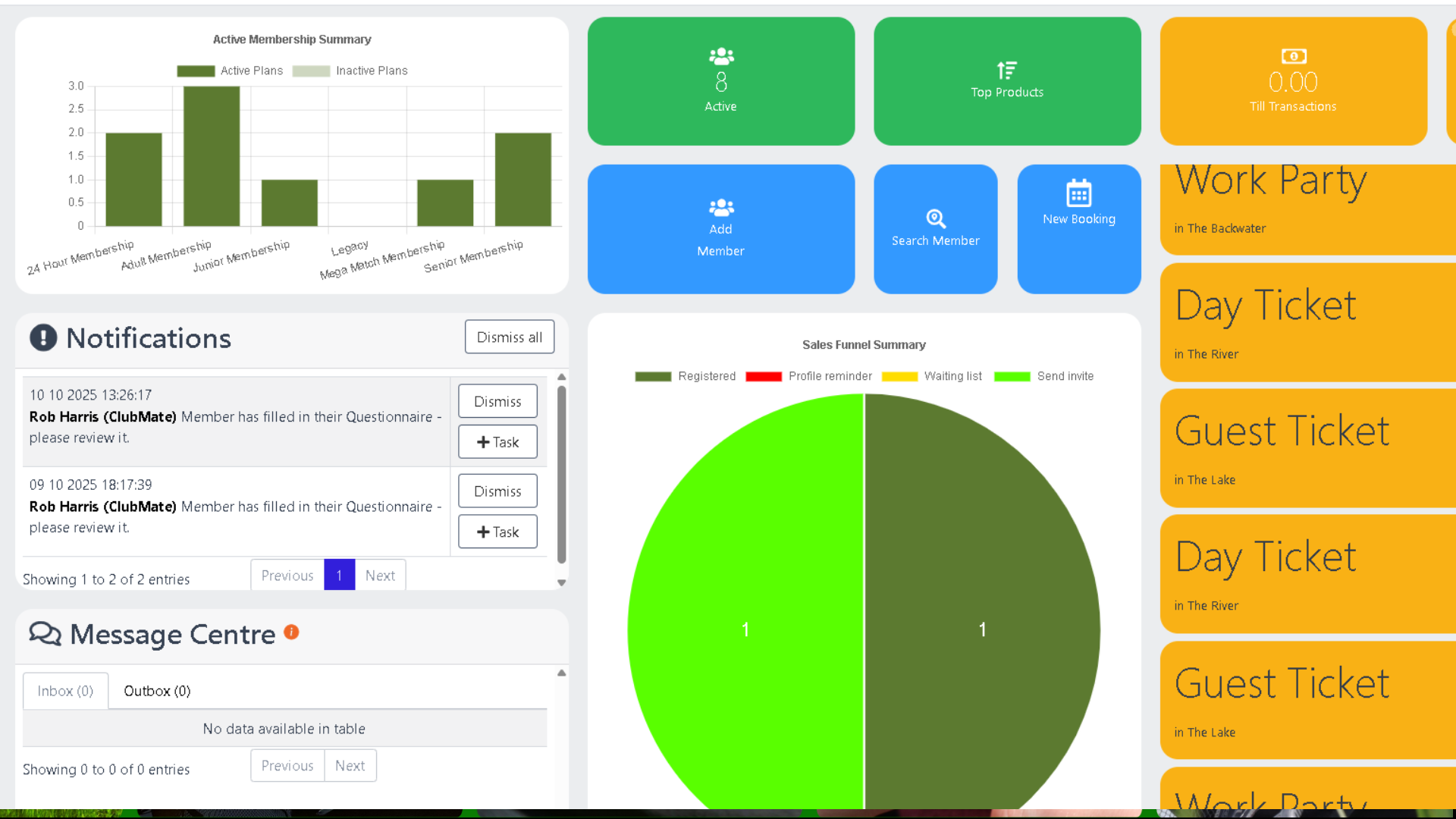
All the data you need, at your fingertips
An analogue world – Traditional challenges for UK angling fishery managers
Although many of the points above could and should be addressed in great detail, they have, in majority, often traditionally been achieved in part as a byproduct of vague attempts to offer and improve angling opportunity, via recognised methods such as fish stocking, traditional forms of membership and booking, outsourced habitat improvement projects, minimal forms of monitoring such as DO testing (often ‘after the fact’) and even the humble work party.
When it comes to UK freshwater angling we are doubtlessly seeing a field that has failed to keep up with the pace of digital advancement when compared to other sports and the wider community and has missed out as a result. In day to day life the ‘app based’ experience is connecting people as never before, with products ordered and delivered overnight and data collected at the touch of a button (and sometimes without it!).
Currently membership and tickets are still widely sold on paper and via bailiffs on the bank, in tackle shops and I even spoke to one recently that sold all of its membership via a butchers shop that opened 3 days a week!

Swamped – managing your workload, not your fishery
Without data collection at this stage, recurring revenue and ongoing marketing become incredibly challenging, limited to ‘hit and hope’ tactics like generic social posts, leaflets and flyers so, not only is this year’s membership hard, next year’s is far from a guarantee! These factors have certainly contributed to dwindling cashflow at angling clubs that, although usually not for profit, rely on this to cover costs and invest in fishery projects and growth.
Turning our attention to evidence gathering and fishery focused data collection, this can be seen to have been almost non existent at traditional clubs and fisheries, with fishery managers relying on ad hoc reports from members, eyes on assessment and heavily reliant on observations from representatives from bodies such as the Environment Agency and fishery management advisors from the Angling Trust, as well as private fishery management consultancies, all of which are extremely time and resource limited and in many cases prohibitively expensive for what is essentially an assessment of one’s own site.
Time & revenue generation – More time on the bank and generating investment revenue
The advent and development of digital technology and cloud based platforms means that not only is practical fishery management made easier but availability of angling opportunity and therefore revenue growth made greatly more accessible, streamlined and less burdensome.
The classic case, and one we hear often, is quite how much time fishery managers spend. Simply selling tickets and handling renewals, often hours a day for months of the year (these mostly at peak fishery performance time). It is not uncommon to hear that some poor soul at a fishery, or in the cases of angling clubs a volunteer, spends most of their spare time for 3 months from January to March manually handling membership via paper, email, bank transfers and application forms. Day tickets are often a case of anglers simply fishing and relying on the good old bailiff walking round to collect cash. These measures are sporadic at best, leave a great deal on the table and can only possibly operate during business hours.
The advent of automation and ticketing platforms means that all of this can be handled easily, in a fraction of the time and in many cases at reduced cost compared to the physical costs. Once captured, the tools are now readily available to manage the angler experience throughout the year via automation, with regular updates, data collection access tools and upselling opportunities meaning that fisheries have many new available options to them to generate additional revenue, of course a limiting factor in fishery management.

All the data you need, right at your fingertips
Marketing via social platforms and websites takes many forms but mean angling can now readily influence the top of the funnel in lead generation rather than the finger in the wind tactics of simply hoping more people go fishing. Publishing success stories and catch reports, highlighting campaigns and advertising seasonal availability instantly means that fisheries are able to maximise their earning potential and minimise admin effort, leaving both more time and revenue for investment in fishery projects.
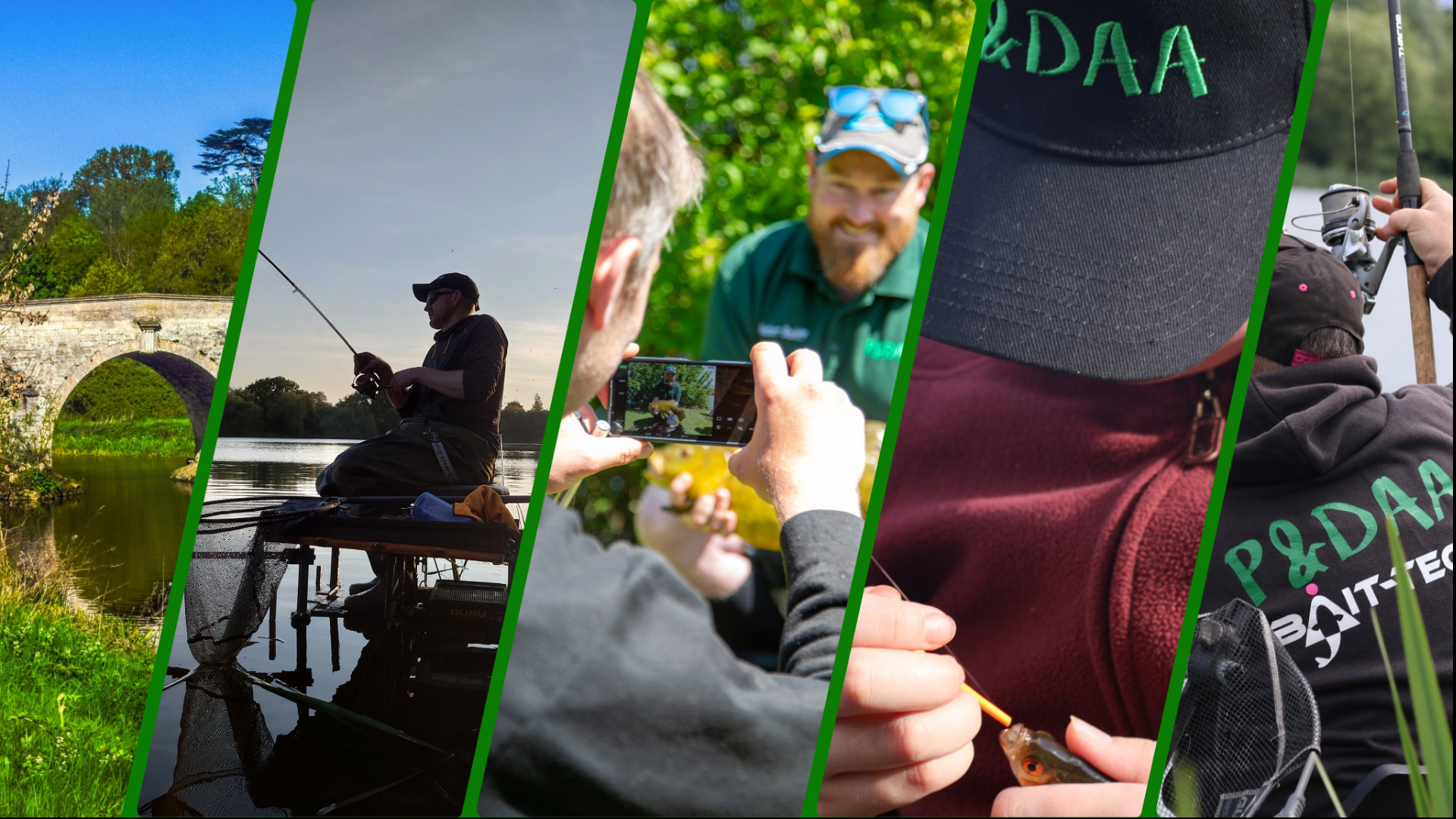
Don’t hope your fishery is successful, show them it’s successful
Clubmate clients currently show an increase in membership of 23% in their first year due to the ready availability of membership and the ability to advertise fishery information quickly and easily to anglers with no required ongoing input from a fishery.
Manchester Angling Club since joining Clubmate is demonstrating 30% increase in annual revenue while reducing admin time by over 500 hours per year
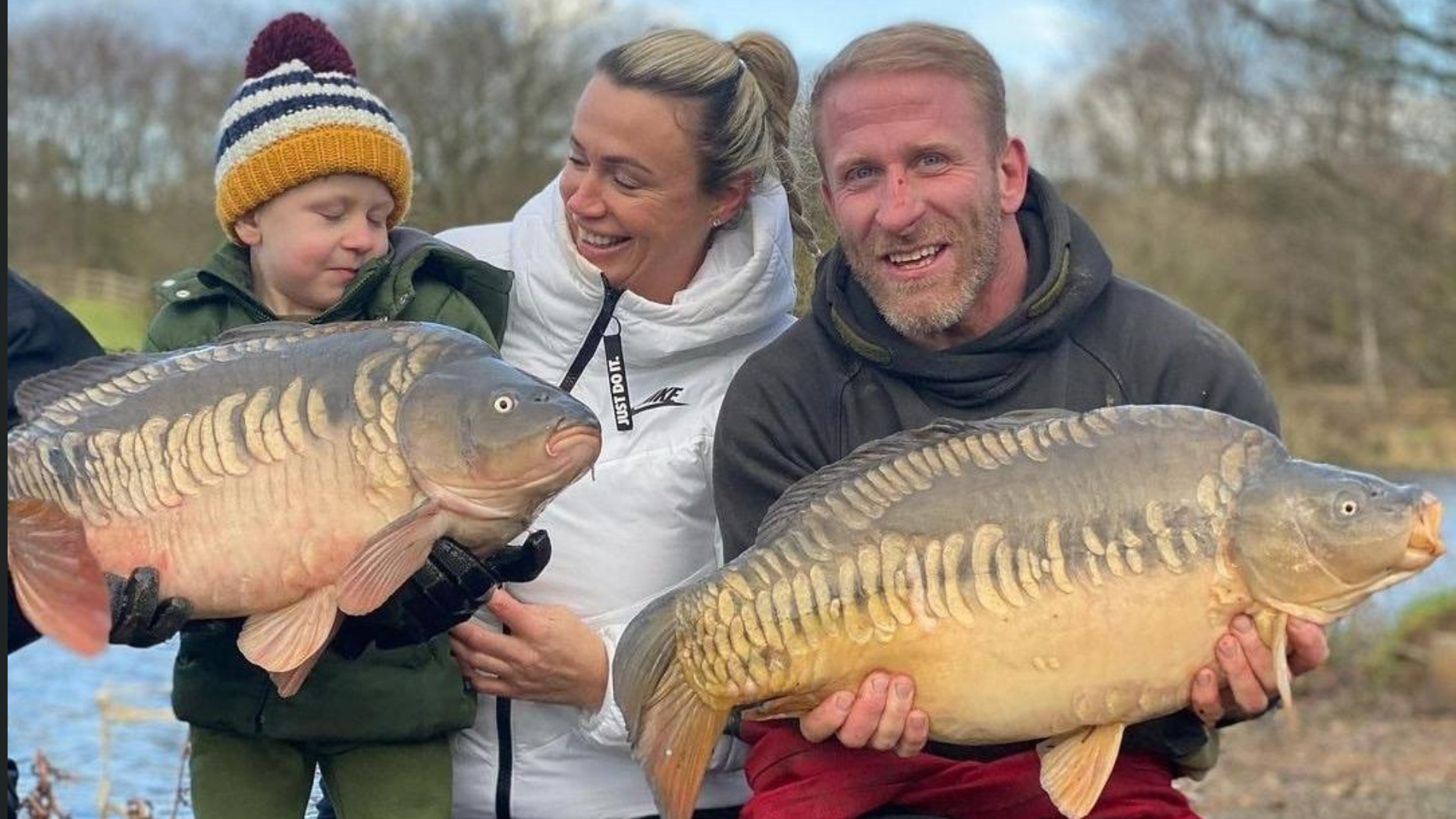
Manchester Angling Club – more time on the bank engaging with fish and fisheries
Data collection & sharing Citizen science, angler-led data, community and its benefits
The advent and development of digital technology and cloud based platforms means that not only is practical fishery management made easier but its necessity made clearer through exponential growth in data collection and access to informal, automated and often passive ‘citizen science’
The term ‘fishery success’ is one underutilised yet key to a meaningful and predictable progression plan for fisheries. Whereas historically this has come down to quite anecdotal data from unverified sources such as conversations with anglers, netting and survey work that is never wholly accurate (also infrequent) and a cursory review of baseline sales as a KPI of success, using modern cloud-based live reporting methods we are quickly able to build a much more data driven picture, respond faster to live data and implement targeted solutions with much clearer goals.
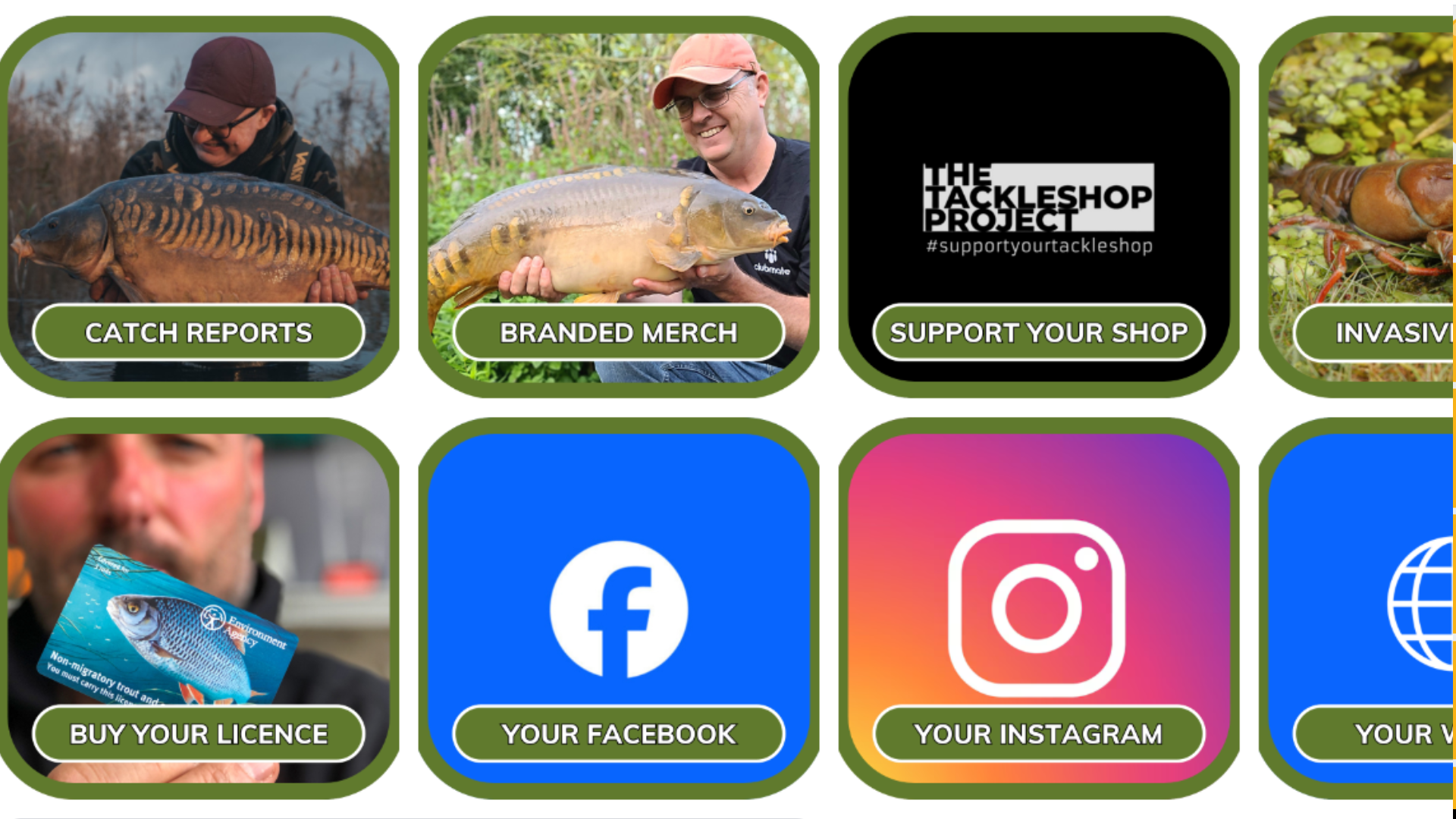
Data collection at your fishery, available 24/7 to your anglers
Take for example one such desirable metric as ‘amount of rod hours per fish caught’. As a measure of fishery success this is nearly infallible given enough input as this can accurately measure trends in fish stocks, size and overall success.
For one example of this I need look no further than my own fishery, with a backwater well known for specimen barbel. In 2012 catch reporting data showed an average of 8 hours per fish caught that has increased dramatically over a ten year period to reach 30 hours per fish caught. Anecdotal evidence had suggested a reduction in angling success due to predation both mammalian and piscivorous bird, especially cormorant, but, without enough data, this could generally be assigned to simple ‘bad angling’ and poor conditions.
Live catch reporting with the correct standardised line of questioning has been able to demonstrate this across a base of over 200 reports per season to allow for more accurate diagnosis and, as a result, we have now been able to evidence this and implement targeted habitat improvement works in the form of marginal habitats, expanded spawning material followed by targeted stocking. Members are able to report this data via their membership app and all visiting anglers receive a link to this via automated email following every visit. Simple though these steps may seem this has improved catch reporting metrics by an average tenfold per annum since inception and really guides the fisheries officer when approaching projects.
Peterborough & District Angling Association have used angler-led digital catch reporting to evidence need for habitat improvement and investment to encourage spawning success at Castor Backwater, working hand in hand with the Environment Agency to offer increased angling opportunity and value for rod licence money by investing in the right areas.
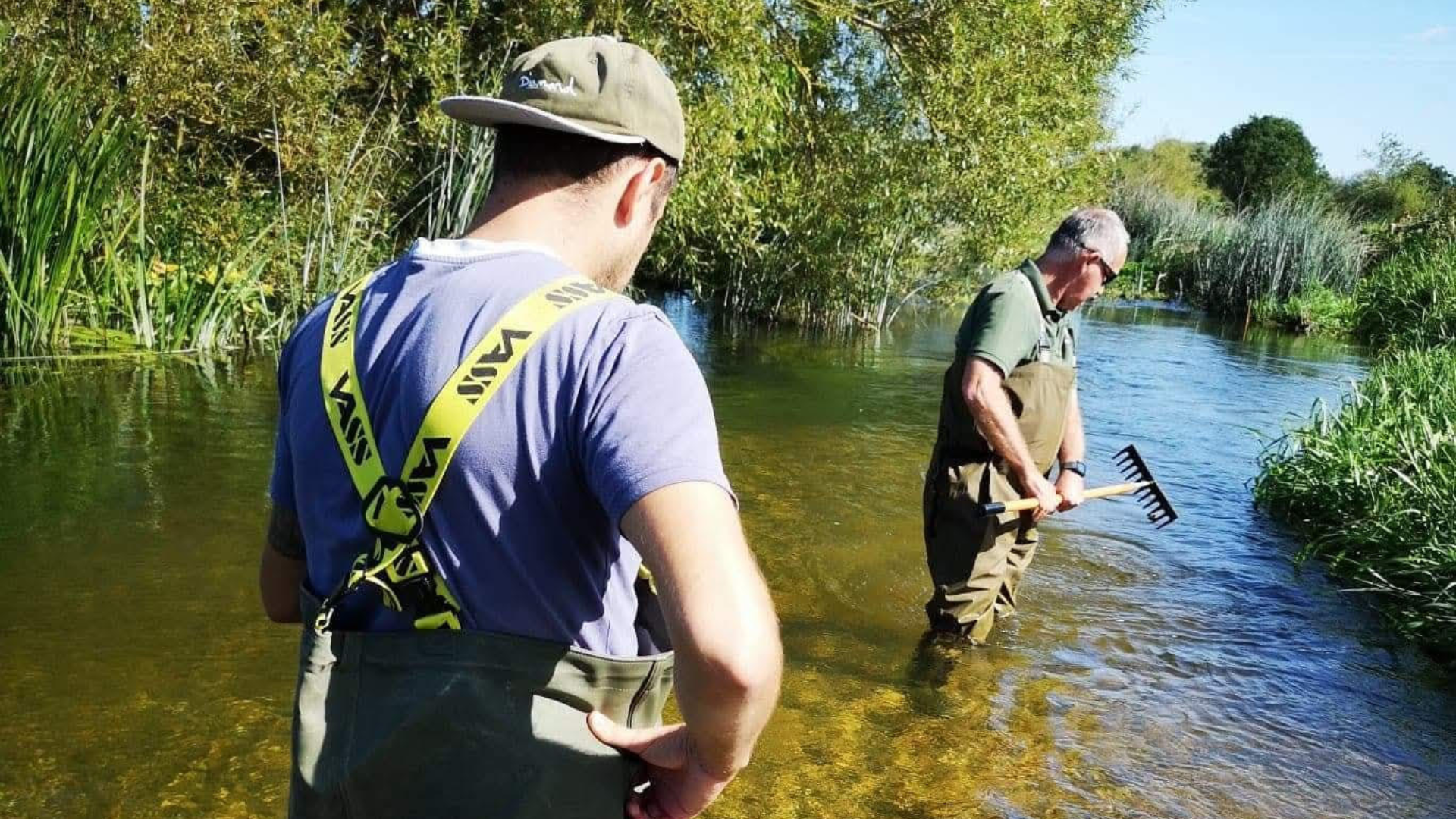
Angler-led catch reporting helped sculpt the future for River Nene barbel
Shifting this from the narrow to the wide, INNS are an ever growing and present issue for fisheries and directly affect angling opportunity throughout the UK. WIth the prevalence of signal crayfish, zander, mitten crabs and non native plants such as Himalayan Balsam tackling these issues is extremely challenging and evidencing tools extremely limited. With anglers not always being the most engaged of audiences, data collection on these to provide hotspot mapping has proven extremely difficult but if you can place these tools within reach of the requirement to fish the angling audience of a million anglers will mobilise for you as fishery managers and knowingly or unknowingly steer the ship of your fishery management much more than a Facebook comment.
We have instigated a new ‘National Species Report’ that anglers can access right next to the button on their phone that pays for membership and day tickets at their site and features all of the relevant non native species as well as a host of important species of interest that may well affect fisheries in the UK and as a result have seen hundreds of submissions in the first few months alone that readily identify sites of serious fishery interest for clubs. This data is GDPR compliant, consented for use and disseminated to specific regions at request in a non identifiable manner in order to help steer upcoming projects and required steps to increase fishery success.
There is perhaps no better example of citizen science and angler led data than the Water Quality Monitoring Network supported and administered by the Angling Trust Water Quality Monitoring Network
As quoted in the video above, anglers are ideally suited to testing water quality as they spend so much time on the water and are passionate about its success. With WQMN volunteers are simply able to test their local water once a month and upload results to a centralised database,
allowing the right information to reach the right place quickly and easily and this has already meant in the first few years proactive action against pollution rather than reacting to disaster and the ability for every willing angler to help empower the Angling Trust in challenging the government on key actions required in the management and governance of water.
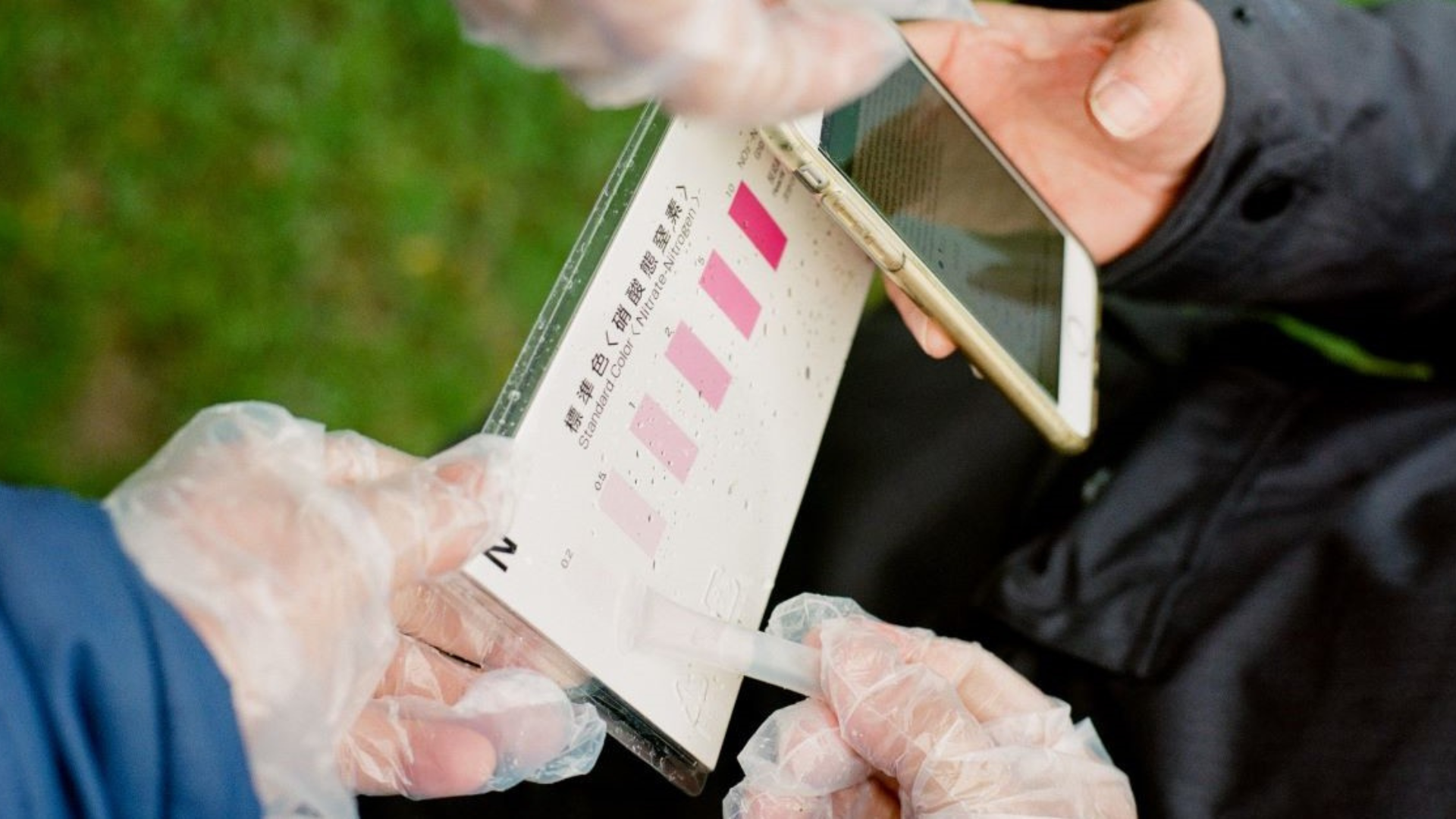
WQMN – Citizen Science at its very best
Casting Forward… Conclusion and future of digital fishery management
It’s clear to see and simple to demonstrate that advancement in digital availability and upskilling has both had a positive effect on fishery success when measured against the 5 basic objectives of angling-focused fishery management. It would seem highly likely that this will continue to expand, most likely at an exponential pace as general digital adoption and coverage improves.
As with all advancements there is always an unpredictability to the future, although in this instance this seems hand in hand with an inevitability. One should always take pause, no matter how beneficial advancements may feel, to assess potential pitfalls and any unseen downside.
It has been suggested anecdotally that digital platforms remove the ‘human factor’ from fisheries and this could be easily argued on the face of it, and is not unheard of as a wider issue. Regarding fisheries though a different way of looking at this is to see the shift in time with customers from transactional to functional. Simply put, instead of speaking to them to sell them a ticket, you can choose to speak with them about your fishery, spend more time on the bank and achieve far more targeted fishery management than when trapped at the desk.
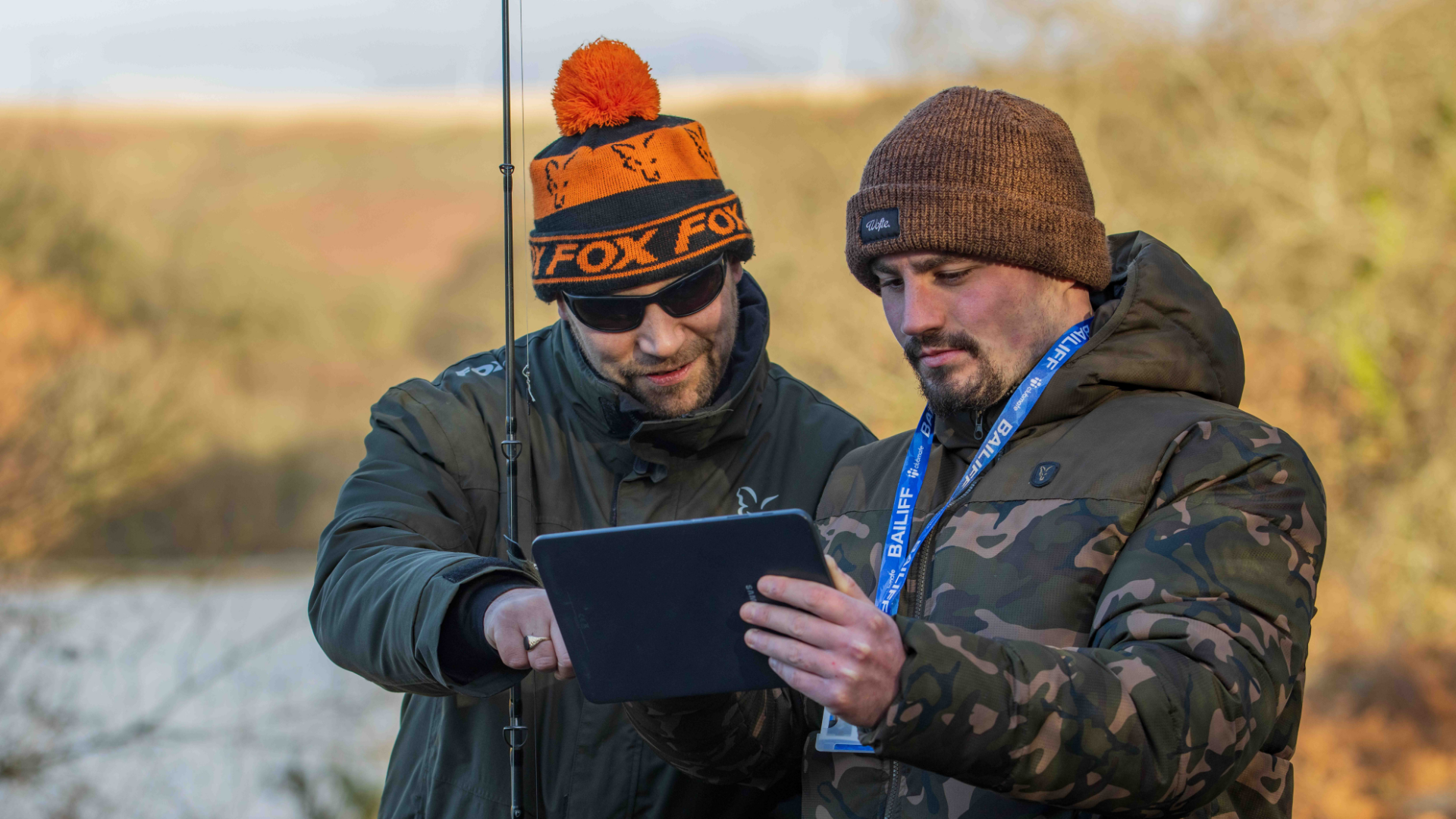
Engage with anglers, there’s a million of them in the UK – that’s a lot of data for your fishery!
Specifically in the UK angling club sphere one of the major questions I would ask is if a lot of fisheries will embrace change quickly enough to avoid their own demise? Recent years have seen several previously renowned and historic clubs shrink and, in some cases, disappear due to declining membership, escalating costs and issues related to predation, pollution, INNS and others and an inability to engage at the speed of modern requirements in a connected world.
It has long seemed likely, and whether this is a good or bad thing is a matter of opinion and only something time will tell, that larger more advanced clubs and fisheries that have embraced change will continue to expand and increase their portfolio by absorbing those left behind. Clubs such as RDAA have thought well beyond the traditional and are using their connected resources to fund and develop their hatchery project, Embryo Angling Habitats are recovering long lost sites to offer safe and secure angling and are using online check in data to target availability and Wasing Estates are using communication tools to disseminate information on their ‘Go Green’ campaign to members at the touch of a button via their regular newsletter, encouraging recycling, rewilding and extolling the benefits of net gain biodiversity to fisheries
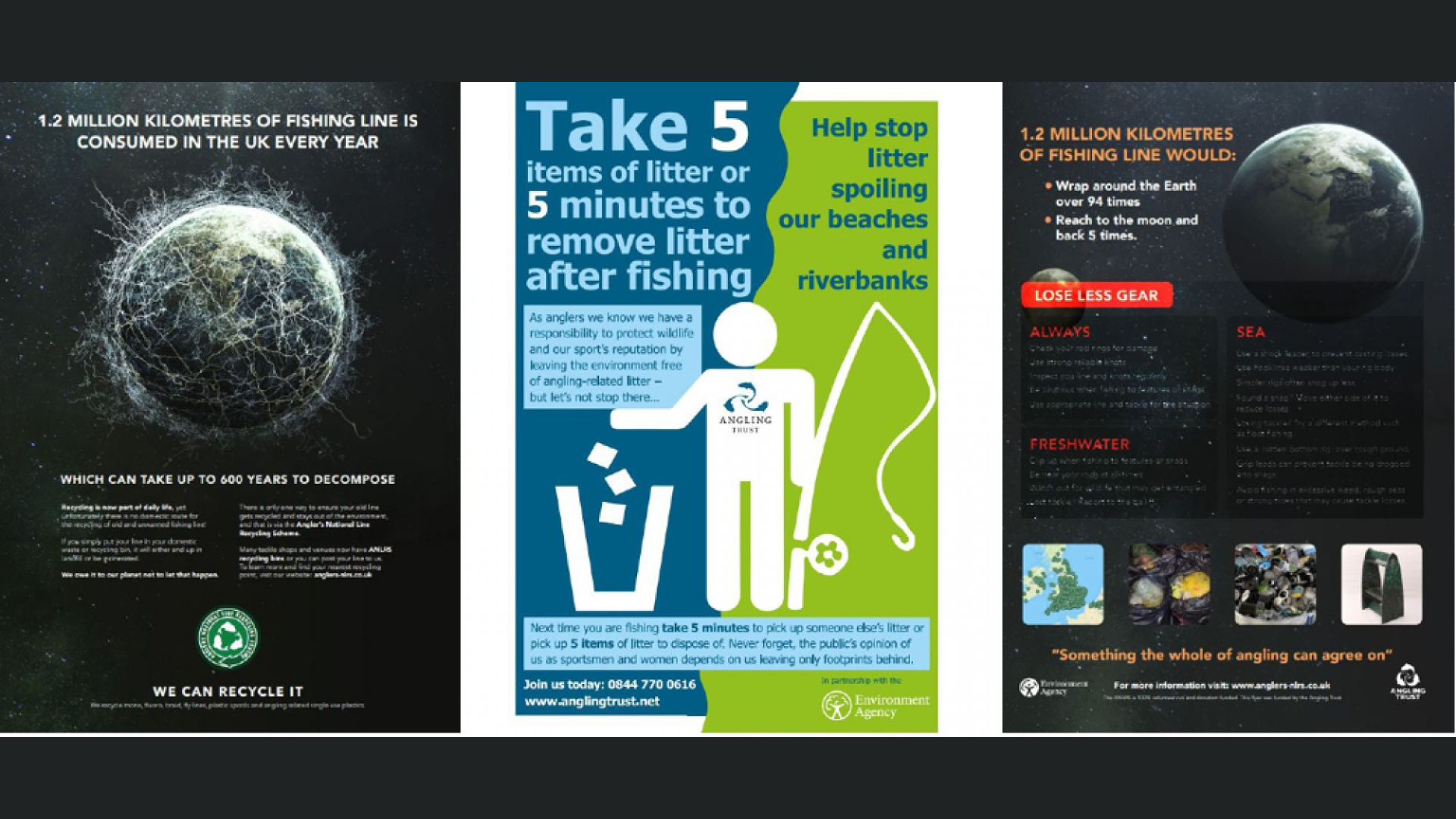
‘Go Green’ with Wasing Estate via their digital newsletter
Of course with new technology comes new opportunities. Far from the traditional grassroots fishery roles of secretary, treasurer, bailiff and the long suffering fishery owner, there are new positions available for marketing teams, digital leads, comms officers and videographers. With an increase in revenue comes the possibility of recompensing what has often been a voluntary position fuelled purely by passion (insert other nouns here). Companies like Clubmate that offer services to fisheries also give passionate anglers the ability to establish a career based on that passion and these represent the people most likely to lead our sport into the future, with sustainable pay at entry level that means we’re developing the experience needed for the fisheries leaders of the future and not losing them to requirement. New careers in angling represent the lifeblood of our ongoing development and digital technology has as much to offer people management as fisheries, ushering in a new wave of talent for fisheries by removing traditional ceilings
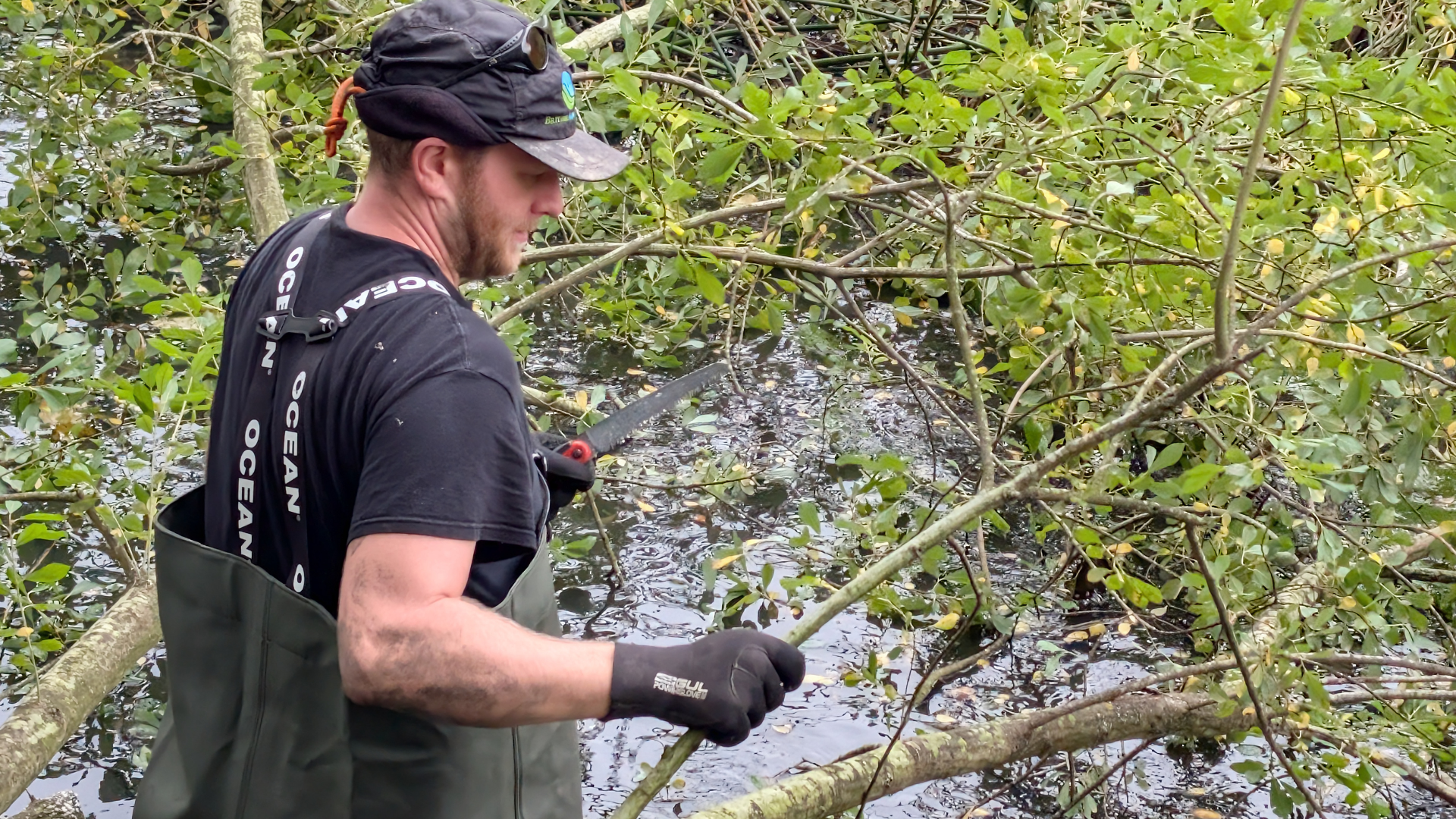
Turn your passion into a career and you too can be 2ft deep in the silt!
To close out, it’s hard to see either a downside or potential pitfalls in improved digital engagement with grassroots fisheries. Challenges remain in the dissemination and implementation to the wider audience but these remain psychological rather than logistical. As we further extol and demonstrate the benefits this will no doubt become easier and, by these very tools, we will demonstrate that, far from being a shrinking sport of a bygone age, angling remains on the forefront when it comes to protecting, promoting and developing fisheries.